

Peer & Patient Resources
SAICEP is committed to connecting American Indian communities with trusted information, support, and services. This page serves as a resource hub for patients, caregivers, families, and community members seeking help, guidance, and education.
Cancer Health Equity PDF downloads
-
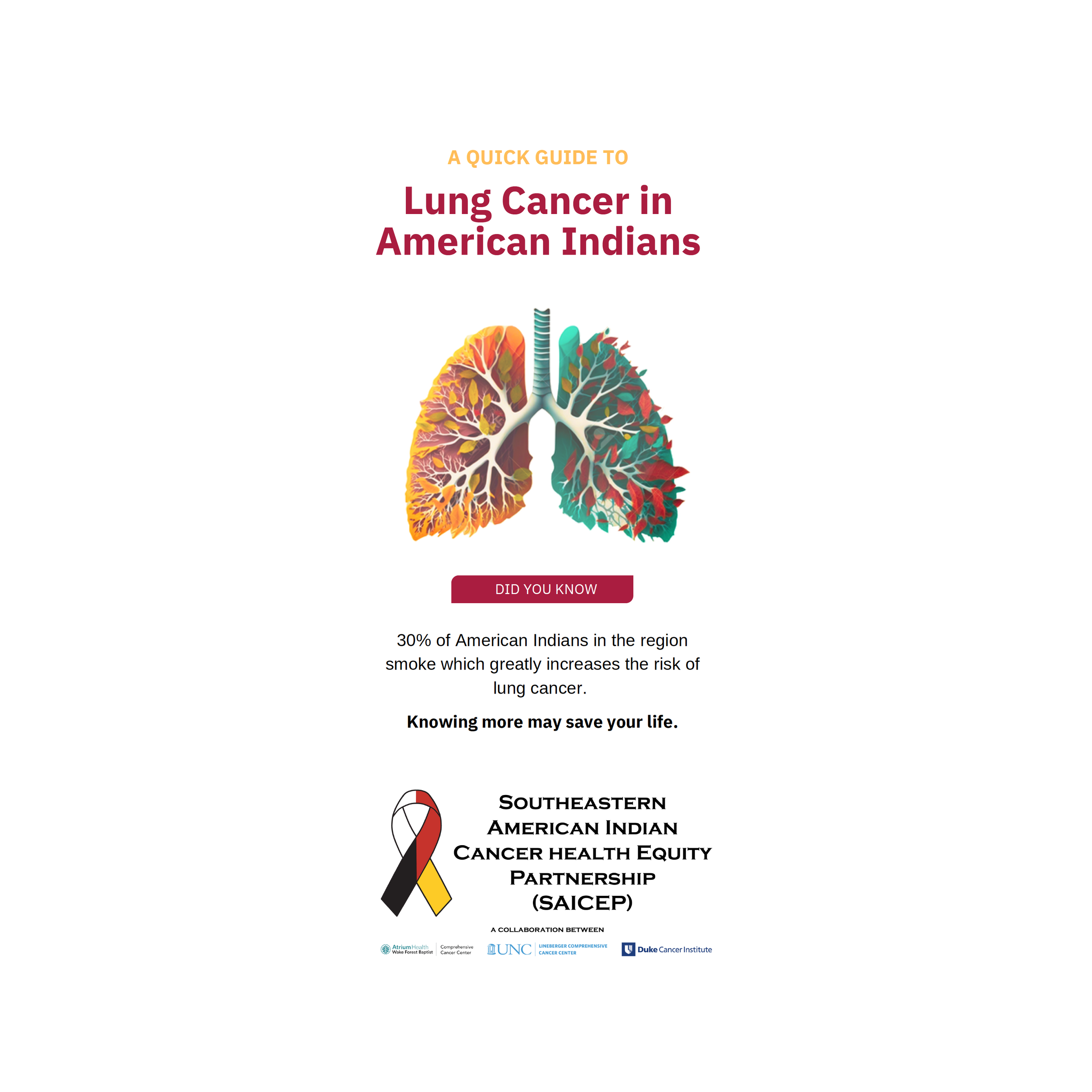
SAICEP: A Quick Guide to Lung Cancer in American Indians
A SAICEP educational brochure focused on lung cancer awareness in American Indian communities. The resource explains lung cancer risk factors, symptoms, screening recommendations, prevention strategies, and the distinction between traditional and commercial tobacco use. It also provides culturally relevant health information, community resources, and details about SAICEP’s mission to address cancer-related health needs among American Indian communities.
-
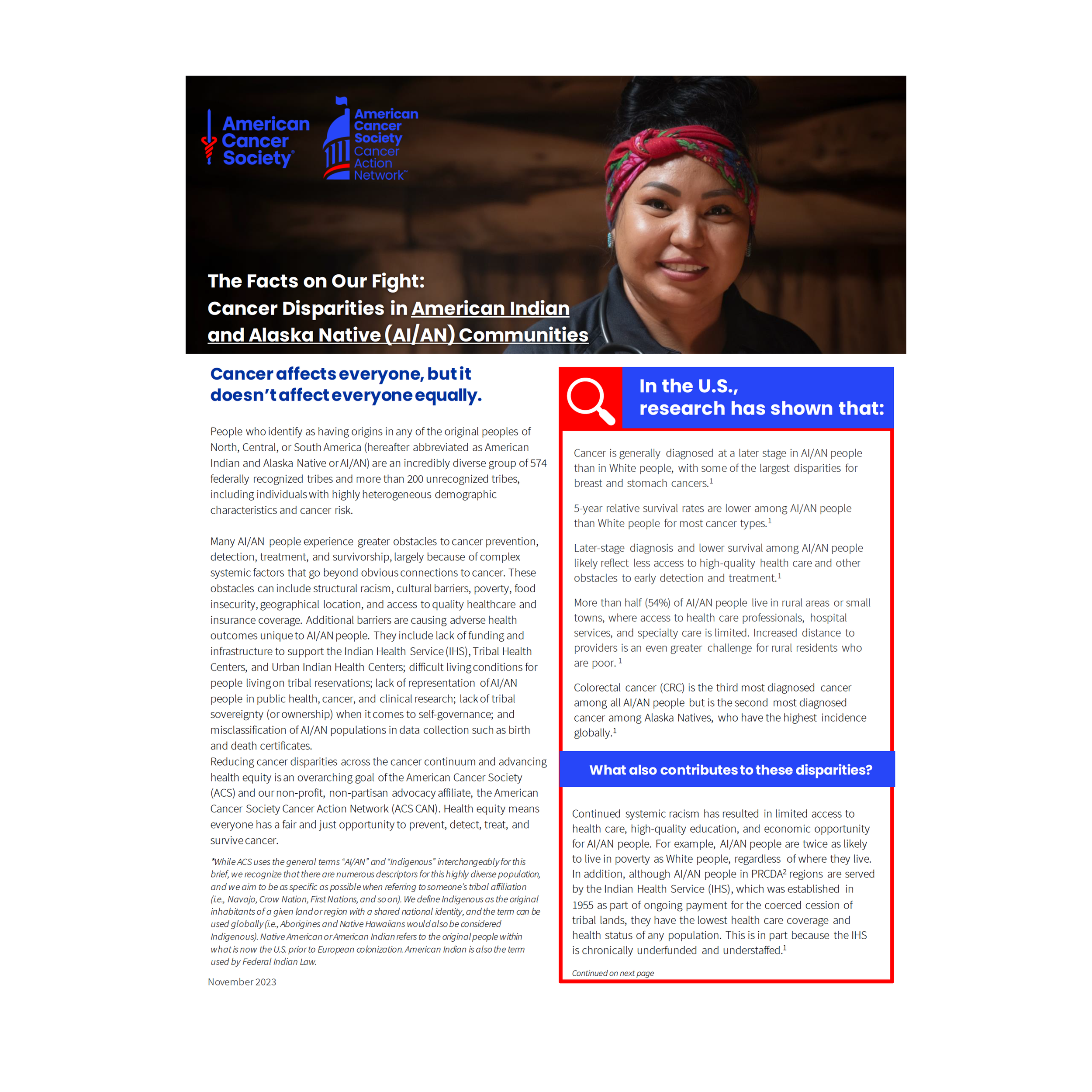
ACS - Facts On Our Fight: Cancer Disparities Data Brief Series
A collection of data briefs from the American Cancer Society examining cancer disparities across diverse populations and cancer types, including American Indian and Alaska Native communities, Black communities, Hispanic/Latinx communities, LGBTQ+ populations, and specific cancers such as breast, cervical, colorectal, lung, and prostate cancer. The series explores the social, economic, and systemic factors that contribute to unequal cancer outcomes and highlights efforts to advance cancer health equity.
-
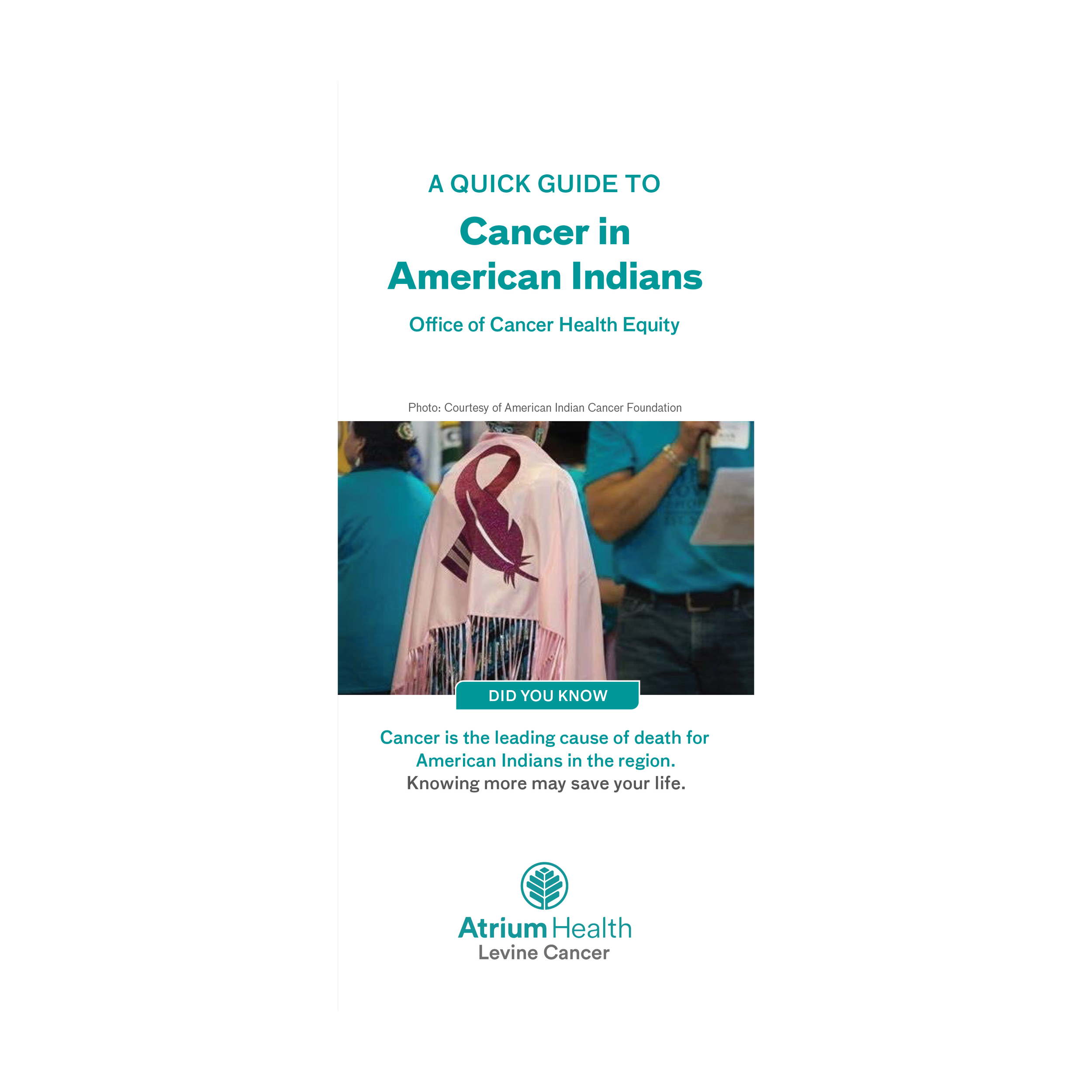
Atrium Health: A Quick Guide to Cancer in American Indians
A culturally tailored educational brochure from Atrium Health’s Office of Cancer Health Equity that highlights cancer risk factors, screening recommendations, prevention strategies, and available community resources for American Indian populations. The guide emphasizes the importance of early detection, routine screenings, and culturally appropriate cancer education and navigation services.
Community Health Departments
Community health departments are organized differently in each state and work to improve the health of people and communities through education, prevention, and public health services.
In North Carolina (NC), a majority of the health departments are coordinated at the local county level. Below is a list of NC health departments serving the counties where the state’s eight tribal communities are located.
In South Carolina (SC), a majority of public health services are coordinated through a single agency, the SC Department of Public Health. This includes services for the Catawba Indian Nation in York County, SC.
-
Alamance County Health Department
Serving the Occaneechi Band of the Saponi Nation in Alamance County, NC.
-
Appalachian Regional Healthcare System (ARHS) Health Department
Serving the Meherrin Tribe in Bertie, Gates, & Hertford Counties, NC.
-
Bladen County Health & Human Services
Serving the Waccamaw Siouan Tribe in Bladen County, NC.
-
Caswell County Health Department
Serving the Occaneechi Band of the Saponi Nation in Caswell County, NC.
-
Columbus County Health Department
Serving the Waccamaw Siouan Tribe in Columbus County, NC.
-
Cumberland County Department of Public Health
Serving American Indian people in Cumberland County, NC, including those connected to Urban Indian Organization Cumberland County Association for Indian People.
-
Eastern Band of Cherokee Indians Public Health & Human Services
Serving the Eastern Band of Cherokee Indians in Cherokee, Clay, Graham, Jackson, Macon, & Swain Counties, NC.
-
Guilford County Department of Health & Human Services
Serving American Indian people in Guilford County, NC, including those connected to Urban Indian Organization Guilford Native American Association.
-
Halifax County Public Health System
Serving the Haliwa-Saponi Indian Tribe in Halifax County, NC.
-
Harnett County Public Health Division
Serving the Coharie Tribe in Harnett County, NC.
-
Hoke County Health Department
Serving the Lumbee Tribe in Hoke County, NC.
-
Mecklenburg County Public Health
Serving American Indian people in Mecklenburg County, NC, including those connected to Urban Indian Organization Metrolina Native American Association.
-
Nash County Health Department
Serving the Haliwa-Saponi Indian Tribe in Nash County, NC.
-
Northampton County Health Department
Serving the Meherrin Tribe in Northampton County, NC.
-
Orange County Health Department
Serving the Occaneechi Band of the Saponi Nation in Orange County, NC.
-
Person County Health Department
Serving the Sappony Tribe in Person County, NC.
-
Robeson County Health Department
Serving the Lumbee Tribe in Robeson County, NC.
-
Sampson County Health & Human Services
Serving the Coharie Tribe in Sampson County, NC.
-

Scotland County Health Department
Serving the Lumbee Tribe in Scotland County, NC.
-
South Carolina Department of Public Health
Serving the Catawba Indian Nation in York County, SC.
-
Wake County Health & Human Services Public Health
Serving American Indian people in Wake County, NC, including those connected to Urban Indian Organization Triangle Native American Society.
-
Warren County Health Department
Serving the Haliwa-Saponi Indian Tribe in Warren County, NC.
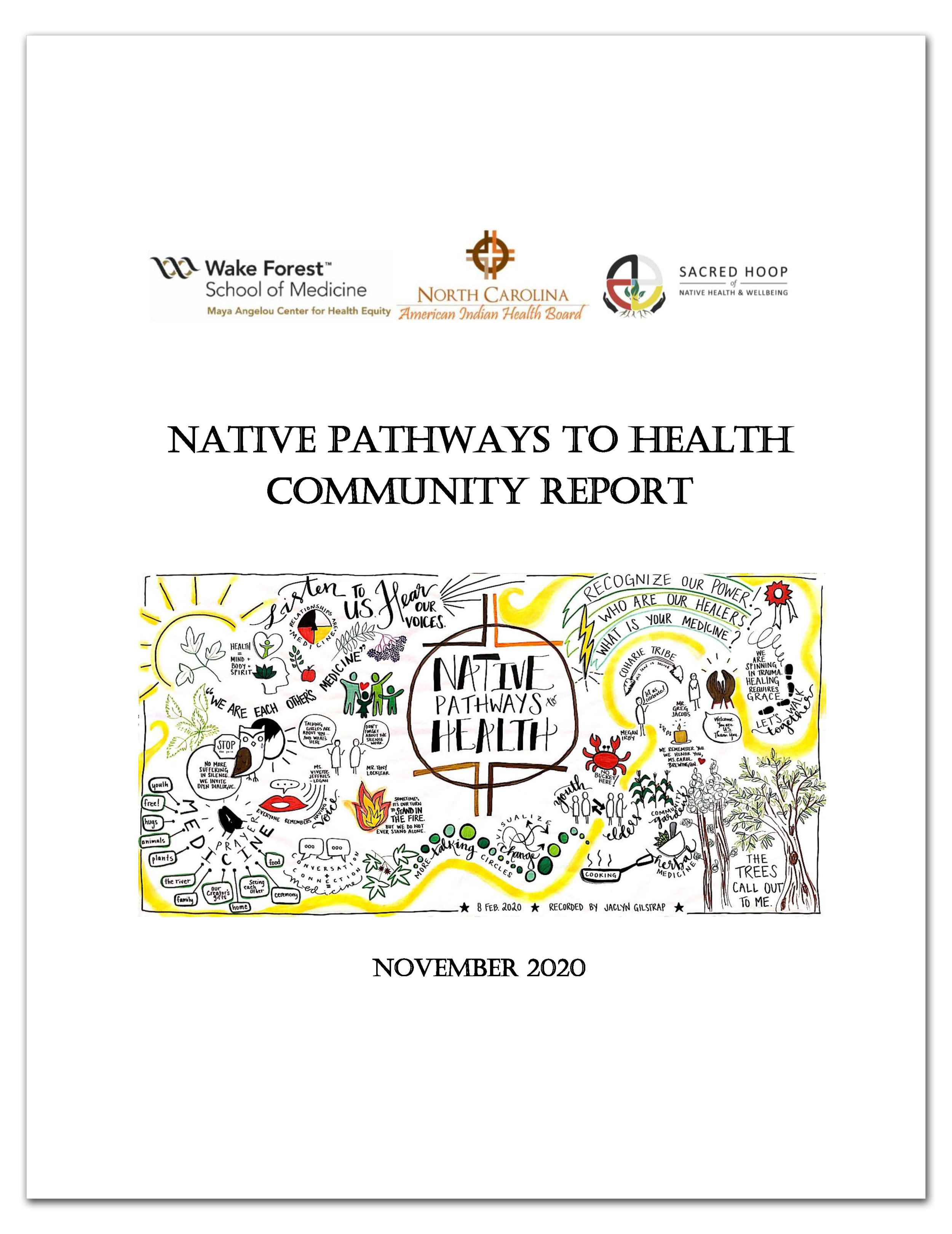
Native Pathways to Health
Native Pathways to Health (NPTH) was a community-driven research partnership led by Wake Forest School of Medicine, the North Carolina American Indian Health Board, and Sacred Hoop Native Health & Wellbeing. Together with Tribal communities and Urban Indian organizations across North Carolina, the project explored what health means to Indigenous communities and identified the strengths, challenges, and priorities that shape community wellbeing.
Through Talking Circles, surveys, and youth-led projects, community members shared their perspectives on health, access to care, cultural connections, community assets, and areas of need. The project engaged nine Tribal and Urban Indian partner communities across North Carolina, ensuring that community voices guided every step of the process.
The findings were compiled into a Community Report that highlights key themes, community priorities, and recommendations for future health initiatives. A short video summary is also available to provide an overview of the project and its findings.
Participating Communities: Coharie Tribe, Haliwa-Saponi Tribe, Lumbee Tribe of North Carolina, Meherrin Tribe, Occaneechi Band of the Saponi Nation, Sappony Tribe, Waccamaw-Siouan Tribe, Metrolina Native American Association, and Triangle Native American Society.

Watch the Project Overview Video
Additional Cancer Resources
-
American Indian Cancer Foundation
The American Indian Cancer Foundation (AICAF) is a national non-profit organization that was established to address the tremendous cancer inequities faced by Native communities. AICAF is Native-governed; its board members and employees have an array of experience serving the health needs of our people
-
Center for Indigenous Health
Founded in 1991 and based at the Johns Hopkins Bloomberg School of Public Health, the Johns Hopkins Center for American Indian Health supports and implements public health interventions designed for and by Native peoples, with the mission to promote health equity for Native Americans.
-
American Cancer Society
The American Cancer Society (ACS) is a nationwide nonprofit dedicated to improving the lives of people affected by cancer through research, patient support, advocacy, and education. ACS provides trusted information, free support programs, and resources for patients, caregivers, survivors, and healthcare professionals.
Watch. Learn. Connect.

Explore educational videos and connect with us on social media to stay informed and engaged.